Clicker training basics for pet parents
Quick Answer
Clicker training feels like magic the first time it works. One tiny click. One happy dog. One clear message that says Yes that is it.
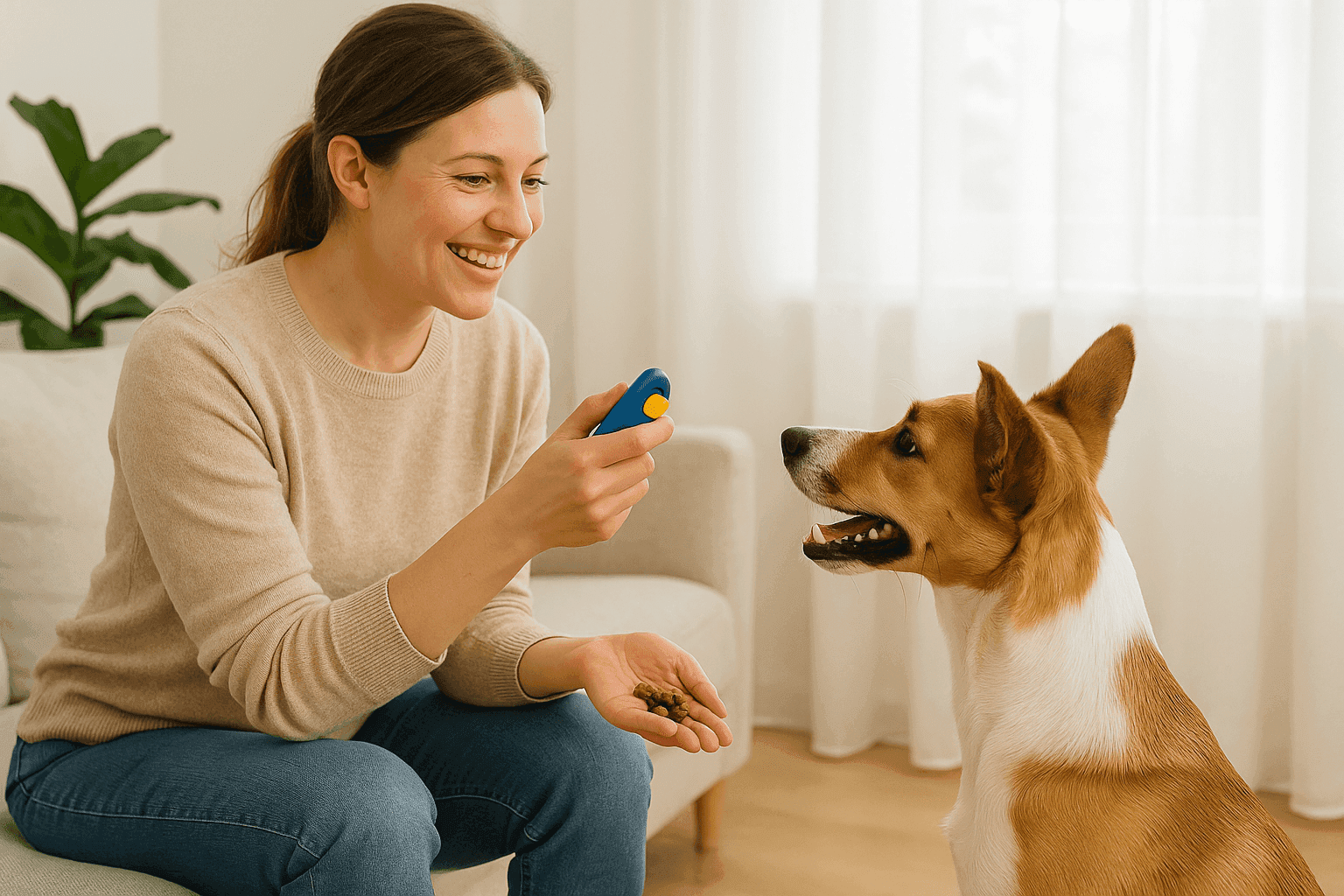
What Is Clicker Training and Why Does It Work
The reason clicker training works better than verbal praise alone is precision. Words carry emotional variation. Your "good boy" at 7 AM sounds different from your "good boy" at 11 PM when you are tired. The clicker sounds the same every time. This consistency helps the dog understand exactly which behavior earned the reward.
Getting Started: The Three Steps
Step two is marking behavior. When your dog does something you want, like sitting, lying down, or making eye contact, click at the exact moment it happens and follow with a treat. Timing is everything. A click that comes two seconds too late marks the wrong behavior.
Step three is adding cues. Once your dog is reliably offering a behavior, add a verbal cue or hand signal before the behavior. Click and treat when they respond to the cue. Gradually reduce the treats to intermittent reinforcement once the behavior is consistent.
What You Can Train with a Clicker
- Sit, down, stay, come, and leave it
- Loose leash walking
- Going to a designated place or mat
- Settling and calm behavior
- Tricks like shake, spin, roll over
- Complex behaviors like opening doors, retrieving specific objects, or going through agility courses
Get a 3-question triage and a vet-reviewed action plan.
Free to try. 30 seconds. No card to start. Rated 4.8 on Google Play.
The key is breaking complex behaviors into small steps and clicking each step in the right direction.
Common Mistakes to Avoid
Clicking too late. If your dog sits and you click as they are standing back up, you are marking the standing, not the sitting. Practice your timing with a friend before training the dog.
Treating before clicking. The sequence is always: behavior, click, treat. Never click and reach for the treat simultaneously. The dog should hear the click before seeing the food.
Using the clicker as a command. The clicker marks behavior after it happens. It is not a recall tool or an attention getter. Keep it purely as a marker.
Why Clicker Training Pairs Well with Health Monitoring
Omelo's daily check-in captures these observations. Over time, changes in training engagement can be an early indicator of discomfort or health changes that deserve attention.
Get a 3-question triage and a vet-reviewed action plan.
Free to try. 30 seconds. No card to start. Rated 4.8 on Google Play.
More in Pet Parenting Playbook


Breed-Specific Health Guides
View all breed health guidesWas this article helpful?
Dr. Anubha
Veterinarian · Medical Reviewer
Reviews all clinical and triage content on Omelo. Hands-on small-animal practice experience across vomiting, dermatology, vaccinations, and emergency triage. All Omelo recommendations pass through Dr. Anubha before publication.
Read Dr. Anubha's full bio →