From itchy to comfy: Simple cat flea care
Quick Answer
Fleas can make the most easygoing cat irritable and uncomfortable. One tiny parasite can trigger a lot of scratching, restless sleep, red bumps, and even skin infections if things go unchecked.
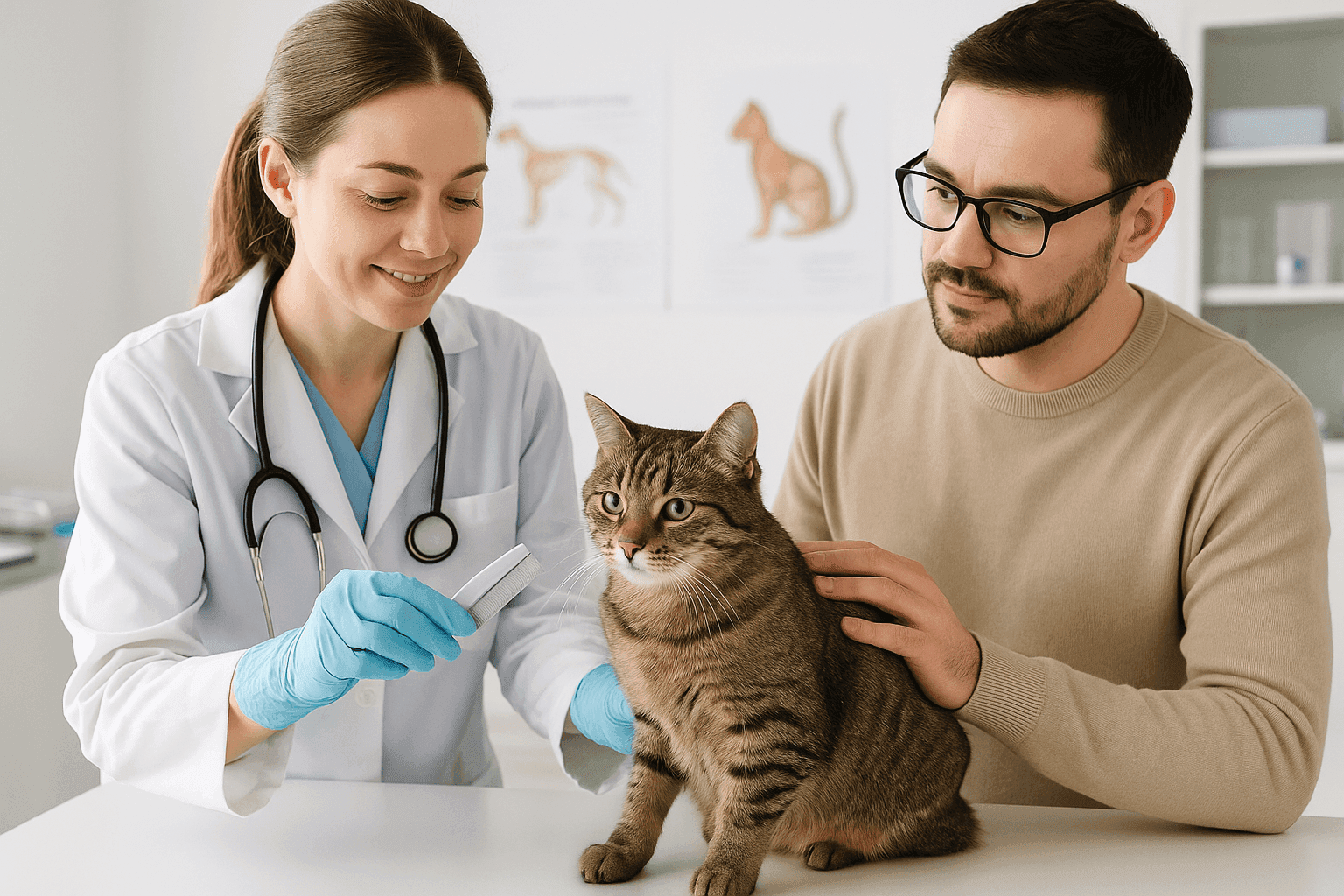
Why Fleas Are More Than Just Annoying
The challenge with cats is that they are meticulous groomers. They often remove visible fleas through grooming, which means you might not see fleas even when they are present. The signs you see instead are the consequences: excessive scratching, hair loss around the neck and tail base, small black specks in the fur (flea dirt), and restless behavior.
Identifying a Flea Problem
- Excessive grooming, especially around the lower back and hind legs
- Red, irritated skin or small scabs
- Hair loss patches
- Restlessness or difficulty settling
- Visible small brown insects moving quickly through the fur
Treatment Options
Oral flea medications work systemically and are available by vet prescription. They are ideal for cats that react to topical treatments or for multi-pet households where grooming between animals could spread topical products.
Get a 3-question triage and a vet-reviewed action plan.
Free to try. 30 seconds. No card to start. Rated 4.8 on Google Play.
Flea collars provide continuous protection but vary widely in effectiveness. Choose one recommended by your vet rather than generic pet store options.
Never use dog flea products on cats. Many dog flea treatments contain permethrin, which is toxic to cats and can be fatal.
Treating the Environment
Wash all pet bedding in hot water weekly during treatment. Vacuum thoroughly and frequently, paying special attention to areas where your cat sleeps. Dispose of vacuum bags immediately or empty canisters outside. Consider a household flea spray for severe infestations.
Prevention Is Easier Than Treatment
Regular monitoring helps too. A quick weekly check of your cat's fur and skin, combined with daily observation of their behavior through Omelo's check-in, catches flea problems before they escalate.
Get a 3-question triage and a vet-reviewed action plan.
Free to try. 30 seconds. No card to start. Rated 4.8 on Google Play.
More in Early Detection 101


Breed-Specific Health Guides
View all breed health guidesWas this article helpful?
Dr. Anubha
Veterinarian · Medical Reviewer
Reviews all clinical and triage content on Omelo. Hands-on small-animal practice experience across vomiting, dermatology, vaccinations, and emergency triage. All Omelo recommendations pass through Dr. Anubha before publication.
Read Dr. Anubha's full bio →